Yes, you can stream a pro football game legally, and you often can do it free. Games air on broadcast networks that reach you over the air with an antenna, through a network's own app, or through a paid streaming service that carries that network. The catch is simple: which option works depends on which game you want and which network has it.
This guide walks through each legitimate route in plain terms. Availability shifts from season to season and market to market, so treat any specific plan as something to double-check before kickoff. What does not change is the shape of the choice: free over-the-air TV, free ad-supported apps, paid live TV packages, and league-run services.
Can you watch football games free and legally?
Often, yes. The biggest games air on broadcast networks, and broadcast means free over the air. A one-time antenna purchase pulls in local stations with no monthly bill, and picture quality is frequently better than a compressed stream. If the game you want is on a local broadcast station in your area, an antenna is the cheapest legitimate answer there is.
The second free route is a network's own app or website. Many networks let you stream their live feed or recent games without a cable login, though some content sits behind a sign-in tied to a pay TV or other subscription. Expect ads; that is how the free tier pays for itself.
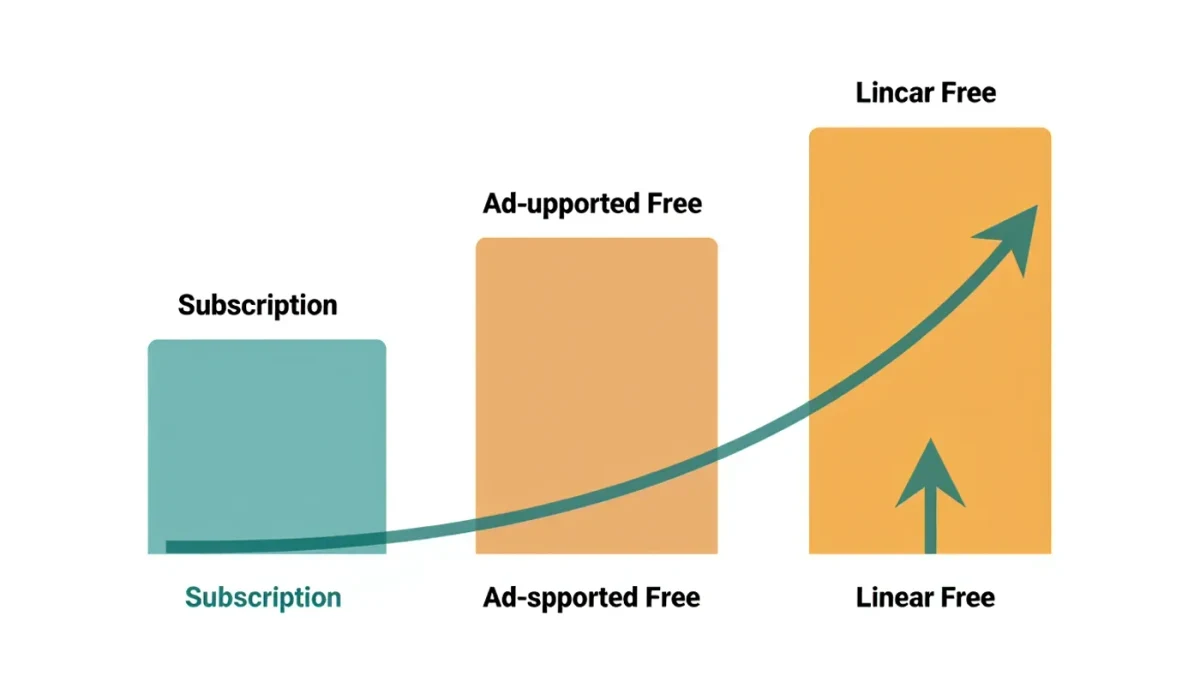
A third free lane is ad-supported streaming. Free, ad-supported streaming television services carry live channels and on-demand content at no cost, supported entirely by commercials. Sports coverage on these services tends to lean toward highlights, analysis, and secondary feeds rather than every marquee matchup, but they are worth a look when you just want football on in the background. For a fuller picture of how that model works, see our explainer on What Is AVOD? Free Ad-Supported Streaming, Explained.
What are the paid options for streaming a game?
Paid services come in two flavors. Live TV streaming packages bundle broadcast and cable channels into a monthly subscription, replacing cable without a contract or a set-top box. The practical question is channel lineup: check that the package carries the specific network airing the game you want, because lineups differ between services and tiers.
The second flavor is single-service subscriptions. Some sports rights live on one dedicated service, which means you can subscribe for a month or a season and cancel when it ends. That works well if football is the only thing you want; it works poorly if you also want shows scattered across other platforms.
One account detail trips people up every season: most streaming apps require you to create and sign in to an account before anything plays. Setting up that sign-in ahead of time, like a Microsoft account, saves you from fumbling with passwords during the first quarter. Note that on Microsoft's account site itself, the service states that to use everything on the website you must turn on cookies in your browser settings.
What about league apps and team coverage?
Leagues run their own apps, and they are worth knowing about even if they are not always the cheapest route. League services typically offer live out-of-market games, condensed replays, and highlights. Local-market games are often subject to blackout rules, a system designed to protect ticket sales and local broadcast partners, so the league app is usually best for fans following a team from afar.
Blackouts are the detail that surprises new streamers most. If a game is blacked out in your market on one service, it may still be available on your local broadcast station or another service entirely. Checking both before Sunday saves frustration.
How do you pick the right option for you?
Our analysis: match the option to how often you actually watch. The choice breaks down cleanly.
- Watch one big game a week: An antenna plus a network app covers most marquee matchups at no monthly cost.
- Follow an out-of-market team: A league service built for that purpose is usually the direct route, blackout rules permitting.
- Want every channel all season: A live TV streaming package, chosen for its channel lineup rather than its price alone.
- Want football noise for free: Free ad-supported channels with highlights and studio shows.
Two practical checks before you commit to any paid plan. First, confirm the service works on the device you own, whether that is a smart TV, a phone, or a streaming stick. Second, look at the ad tier question, since cheaper plans usually mean more commercials; our guide to Streaming Ad Tiers: What to Know Before You Pick a Plan breaks down that trade-off.
Internet speed matters too, especially for live sports where a stutter at the two-minute warning is its own kind of heartbreak. If your household shares bandwidth, our piece on Internet Speed Requirements for Streaming, Explained covers what to expect.
Why does availability change so much?
Sports rights are licensed, not owned outright, and licenses get renegotiated. A game package that lived on one network last season may move to a streaming service this season. That is the same licensing machinery that decides why shows and movies rotate off platforms, which we explain in Why Do Shows and Movies Leave Streaming Services? Licensing, Explained.
The takeaway for viewers: treat any specific answer about where a game streams as dated information. Verify the matchup, the network, and the service in the week you plan to watch. It takes two minutes and beats discovering the blackout rule at kickoff.
What this means for your game-day setup
The legal landscape is friendlier than it looks. A basic setup, an antenna for broadcast games plus one paid service matched to your team, covers most fans for less than a traditional cable bill. Add a free ad-supported service for the in-between hours and you have football nearly every day of the week without a single sketchy link.
What remains unknown from season to season is exactly which service holds which rights, and that is the part worth rechecking each fall. The structure, free broadcast, paid packages, league apps, holds steady; the details move.